… And now I am mad

Standard

This is an epilogue to my previous blog post called “A cuppa history”. Something was missing. When I thought about it, I realized that my tea story with its happy ending had misplaced optimism. I had forgotten an essential element. What became of the poor living conditions of the tea plantation worker? Dreading what I would find, and expecting the worst, I looked it up.

Just as expected, the living conditions of the workers continue to be terrible. They live in broken houses with no toilets and defecate amongst the tea bushes. There are reports of minors working full time, and women, as usual, get the lowest wages while pulling the maximum weight.

Of course this comes as no surprise. Once terrible living conditions have been established and accepted, the group in question rarely gets a better deal. The post-independence, Indian (Swadeshi) label added a jingoistic ring to the tea but no longer did our esteemed and formerly concerned revolutionaries and politicians cared about the living conditions and exploitation of the tea workers. On the contrary, once the tea craze caught on, production ramped up, thereby adding to the workforce while having a similar or even lowered living conditions than the past. No surprises, right?

Surprise! Fast forward to 2015. There’s an article in business-humanrights.org that talks about BBC’s investigation of the inhumane living conditions in tea plantations in Assam! Wow, just wow! So the British started off with inhumane living conditions right since 1850s. And now they launch a new investigation and publish their holier-than-thou findings in 2015!

As expected, pandemonium follows this “research”. British tea brands such as PG Tips, Tetleys and Twinings say they will work to improve the living conditions, following the special insight that they have gained from this report. Harrods stopped selling some tea products, and Rainforest Alliance, which is an ethical certification organization, says their audit process may have some flaws. Popcorn anyone?

Assam company, which owns these plantations, calls the allegations “baseless and false”. The great Tata, who Indians will swear by, said that its membership of Ethical Tea Partnership (ETP) demonstrates its commitment to improving living conditions in the tea industry. So Tata says, hey! I pay membership to this fraud organization ETP and so we’re in the clear!

Lastly, Taylors of Harrogate, which owns the Yorkshire tea brand, told the BBC that they were “extremely concerned” by BBC’s findings and are “exploring “investigating as a matter of urgency”. I guess it’s so urgent that its being explored urgently since about 175 years. I have no words.

I write this while drinking my cup of tea and am filled with sadness and a guilt that was never mine until yesterday when I explored this topic. So what’s the solution? Giving up tea? Drink water? That is possible. Any other fruit or milk drinks will have similar horror stories. Of this I have no doubt. What a sad state of affairs.

Reference:
https://www.business-humanrights.org/en/latest-news/bbc-investigates-inhumane-working-conditions-in-tea-plantations-in-assam-india-brands-respond/

A cuppa history

Standard

While in India, my parents and I had discussions on a variety of topics over cups of tea. One of the topics turned out to be about the history of tea.

My parents mentioned that tea was not historically a part of Indian drinks. It appeared nowhere in the list of drinks that Indians had. Traditionally it was lassi, milk or fruit juices. Tea was popularized by the British. They set up tea stalls at every nook and corner of Indian streets. They would serve chai for free in stylish cups and saucers. My mom herself recalled drinking such a free cup of tea in a fair as a kid! They also mentioned that places in Haryana still serve milk. This fact was somewhat corroborated by friends from the region who said that they serve lassi and milk to their guests.

India is a tea crazy country. This is a fact beyond all facts! The idea that tea was popularized in the last century by the British and post independence India was intriguing to me. So I read up on it, and as it (often) turns out, my parents are right on. The history of tea in India is interesting. So here’s my Indian tea history 101!

Historically tea is a Chinese drink. As mentioned above, Indians traditionally drank milk, yogurt based lassi and fruit juices. The British got their tea addiction from the Dutch and the Chinese. Alas, the Dutch sneak in here as well. They seem to make frequent appearances in most of my stories!

Moving on, the Chinese exported tea to the British. In return, the British were exporting opium to China. The Chinese emperor understandably did not approve of this trade that created addicts in China. And so China abruptly ended tea trade with the British in 1800s. It confiscated the opium and destroyed it. The British sent warships to China, but ultimately felt that they had to own the tea. A botanist name Robert Fortune stole tea seeds from China.

The British had explored India and found wild tea growing in Rangpur, Assam around 1830s. The British proceeded to establish tea gardens in Assam with the seeds from China (and maybe local Indian tea as well). They were met with a stiff resistance from the local Assamese people. The Assamese fought against clearing their jungles for tea gardens. Furthermore, they would not work in the tea gardens. As is typical British, they brought in migrant workers from various parts of India to work on the tea plantations as indentured laborers. These migrants faced inhuman working conditions, disease, malnutrition, debt and high mortality rates of up to 50%. The British tried to keep these working conditions a secret, but it did come out. Although some rich Indian babus working for the British had taken to tea drinking, the condition of the migrant workers forced Indians to give up tea.

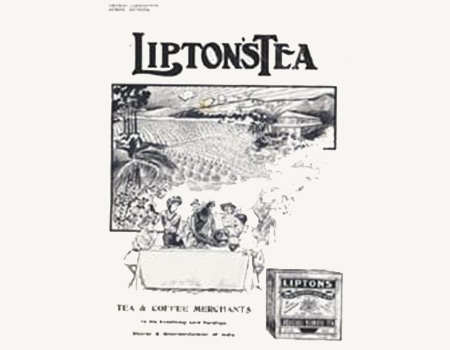
Around the 20th century, the British tea markets started to stagnate. That’s when the British turned to the India to expand their tea market (in 1903). The Indians were slow to take to tea. Tea advertisements in 1911 still showed white people being served tea by the brown people.

Tea hubs opened in 1920s and 30s as political and cultural hubs. Later they even became meeting places for pro-independence Indians and intellectuals. In the 1930s and 40s (during the depression), tea was aggressively promoted in railway stations across India. Free tea was offered, or one paisa take-home single-use tea packets were sold.

However, tea was not fully accepted in 1940s and 1950s. This is because Gandhi and other nationalists argued that tea was an imperialist, anti-Indian drink. The poor working conditions of the migrant workers were highlighted and tea drinking was discouraged by the freedom fighting revolutionaries. The advertisers replaced colonial messages with promoting tea as a Swadeshi drink, with revolutionaries featured in the advertisements! This is mind boggling to me. The British advertisers actually used freedom fighters that would ultimately kick the British out to increase sales on a British product. Wow! So very short sighted. Anything for a quick buck!

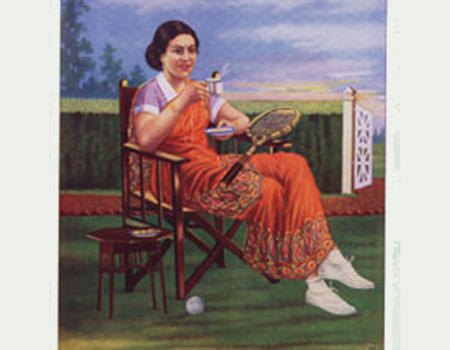
Darjeeling and Assam tea were expensive. But slowly production was improved and cheaper grades of dust and fannings of tea were marketed. This brought tea to the middle class. It was only post independence after tea estates and tea wholesale came to the Indian hands did tea take hold in India. The marketing also shifted to show rich Indian ladies patronizing tea drinking. Tea was deemed Swadeshi (Indian) in 1953. The shift from the full leaf black tea to the crushed, torn, curled tea allowed the customers to come up with a stronger infusions than the traditional (read “boring” from the Indian point of view) British recipe. The Darjeeling leaf tea did not lend itself well to the spicy milky tea that catered to the Indian taste. But the heavy, Assam tea captured the Indian interest. Indians then proceeded to add their spices, milk and sugar to make strong “kadak” brews that have now gained worldwide popularity.

Now one can find the “chai” tea in many cafes in the US. Chai tea has now come to be synonymous with the spicy Indian brew that we have all grown to love. But it will be remiss of me to end this blog without adding this note. Dude, chai means tea (as the Indian Spider man would undoubtedly tell you). So can we all agree to call it just chai (and not chai tea)?!

References for the image are included at the end of the blog. Many of the images are from the Priya Paul collection.

References:

https://www.npr.org/2010/03/28/125237353/the-tea-thieves-how-a-drink-shaped-an-empire

https://www.historyofceylontea.com/ceylon-publications/ceylon-tea-articles/the-british-ad-propaganda-the-journey-from-tea-to-chai.html

https://www.seriouseats.com/indian-tea-history-5221096

https://theprint.in/pageturner/excerpt/how-british-used-indian-railways-free-cups-women-to-make-indians-tea-drinkers/711106/